Proof of concept report
Operations Optimization & Analytics and Emergency Response & Security Challenges
August 25, 2026


Overview
Most New Yorkers never think about what happens after they turn on a faucet or flush a toilet — and that's by design. Behind that everyday reliability is the NYC Department of Environmental Protection (DEP), which operates the nation's largest municipal water and wastewater utility: reservoirs and dams upstate, treatment plants across the five boroughs, and a vast underground network of sewers and pumping stations that keep the city running through every storm. Modernizing a system of that size, without ever taking it offline and in the face of increasingly unpredictable weather, is one of the hardest operational challenges in city government.
That's where the Environmental Tech Lab comes in. In June 2025, the Lab — a partnership between DEP and the Partnership Fund for New York City — launched its third cohort of technology companies, this time focused on two of DEP's most pressing needs: helping operators make faster, better-informed decisions across a sprawling operation, and strengthening the agency's ability to detect and respond to threats, from air quality hazards at construction sites to unauthorized access at critical facilities.
Over 25 DEP operators and leaders reviewed nearly 100 applications from companies around the world, and ten were selected to run proof-of-concept projects: real-world tests of their technology inside DEP's operations, from a reservoir dam upstate to wastewater treatment plants in Brooklyn, Queens, and Manhattan.
The technology in this report is often highly specialized, but what it's built to solve is not: cleaner water, fewer sewer backups, faster emergency response, safer job sites. This report walks through what each of the ten companies built, how DEP put them to the test, and what it could mean for a system that millions of people depend on without ever seeing it work.
Operations Optimization & Analytics Challenge


DEP identified a need for tools that help operators make faster, better-informed decisions — from tracking field assets and diagnosing infrastructure, to analyzing complex operational data and quantifying emissions. The six companies selected for this challenge tested a range of approaches from vehicle-mounted LiDAR scanning to continuous methane sensing.

Bluesonde
Portland, ME
PARTNER AGENCY
Bureau of Wastewater Treatment
ABOUT
Bluesonde makes compact, low-maintenance water quality monitoring buoys that stream continuous, high-resolution data, eliminating the need for frequent vessel trips and manual sampling. Their buoys measure temperature, dissolved oxygen, salinity, turbidity, and chlorophyll, uploading data in real time via cellular connection to a web-based dashboard.

RESULTS
Bluesonde deployed two buoys at Newtown Creek Wastewater Treatment Facility, generating 1,500 real-time data points across five water quality parameters and detecting seven combined sewer overflow (CSO) events, including how long the creek takes to return to safe conditions after an overflow. DEP identified the strongest near-term use case in continuously tracking the dissolved oxygen levels, which would require Bluesonde to develop a subsurface sensor. Continuous dissolved oxygen readings could replace twice-weekly manual sampling and help pump in only as much air as needed, reducing energy costs associated with aeration. If a subsurface sensor that could continuously monitor dissolved oxygen was deployed across five Newtown Creek sites, it’d be roughly 25% cheaper than the current manual sampling costs, saving over $300,000 within the first year.
"It was great working with Bluesonde as part of the Environmental Tech Lab and we were impressed at how easily deployable their system is. We see a bright future for this style of equipment as they expand real-time monitoring capabilities."
– Director, Bureau of Wastewater Treatment

Cyvl
Somerville, MA
PARTNER AGENCY
Bureau of Water & Sewer Operations
ABOUT
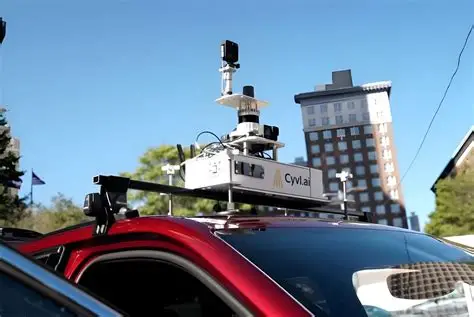
Cyvl uses vehicle-mounted AI and LiDAR sensors to scan city streets and build a continuously updated digital record of above-ground infrastructure like manholes, catch basins, roads, and signage, helping governments improve safety, coordinate maintenance across departments, and make proactive capital decisions.
RESULTS
Cyvl scanned an area in Astoria, Queens, previously reviewed by internal teams, and analyzed more than 700 DEP assets across three use cases. Use case #1 - work order validation: Cyvl automatically detected and validated 311-generated maintenance requests using street-level scan data, achieving approximately 25% automated detection rates and projected savings of $500,000 per year by eliminating unnecessary field visits. Use case #2 - asset recovery: Cyvl identified ~1.7% manholes in the scanned area had been partially or fully paved over during road resurfacing. DEP estimates that recovering buried manholes across the city during each paving cycle would cost between $8 million to $32 million. Sequential Cyvl scans could enable DEP to flag and recover these assets before they beco emergencies. Use case #3 - street flooding investigations: Cyvl showed that physical measurements previously requiring hours of field work could be pulled virtually from scan data, enabling an estimated 7 to 10 times increase in yearly investigation capacity and projected savings of around $1 million in field costs.
“Working with Cyvl allowed DEP to see the real-world potential of LiDAR sensor and computer vision technologies across a range of use cases. Their team didn’t just demonstrate the strength of their existing solution. They showed real agility in improving and expanding it to meet new needs as they arose. Properly operationalized, this technology has the potential to shift DEP from reactive to proactive asset management, with real benefits for stormwater planning.”
– Project Manager, DEP Bureau of Water & Sewer Operations

Nyad
Birmingham, AL
PARTNER AGENCY
Bureau of Wastewater Treatment
ABOUT
Nyad provides an AI co-pilot built specifically for wastewater plant operators, designed to help staff keep their facilities safe, efficient, and compliant. The platform allows operators to upload operational data, microscopy images, lab results, and plant documents, and then receive clear, contextualized answers drawing on both plant-specific knowledge and broader wastewater expertise.

RESULTS
Nyad deployed their platform with Newtown Creek and 26th Ward wastewater treatment operators. This gave process engineers an AI chat tool for real-time decision support and a computer vision model to analyze microscope images of activated sludge, receive AI-generated diagnostics, and discuss targeted operational recommendations. Operators logged 473 messages across 55 conversations and uploaded 198 microscopy images, with average response times under 60 seconds. At scale, Nyad could give engineers near-instant insight into biological conditions that typically take days to verify, while preserving plant-level institutional knowledge.
"NYAD gives process engineers and operators near-instant insight into biological and process conditions that used to take days to verify, enabling faster, more confident decision-making within our system. Collaborating with NYAD offered a clear view into how AI can meaningfully enhance plant operations, helping teams work more efficiently and proactively."
– Process Engineer, Newtown Creek WRRF

Sunfish
Austin, TX
PARTNER AGENCY
Bureau of Water Supply
ABOUT
Sunfish builds autonomous underwater vehicles (AUVs) designed to inspect hard-to-reach water infrastructure like deep siphons, aqueducts, and intakes, without the cost and risk of traditional drain-down or manual diving methods.

RESULTS
Sunfish deployed its autonomous underwater vehicle at New Croton Dam for over 7.5 hours across two days, inspecting a wall section and intake structure to detect zebra mussels, freshwater mollusks that can compromise water quality and operations. Unlike traditional methods, Sunfish can collect data with no crane setup, drain-down, or workers entering the water. The high-resolution data from the inspection helped to detect zebra mussels and validated measurement accuracy to within 8%. The more promising use case is around using Sunfish to conduct inspections of deep tunnels and pressure aqueducts inaccessible to traditional remotely operated vehicles. Sunfish is currently developing a product that would be able to operate under larger flow rates and pressure heads to make this possible. Once developed, Sunfish projects this approach to be roughly 60% cheaper than conventional methods.
"The Sunfish team demonstrated a compelling piece of AUV technology that has great promise for inspecting the City’s unseen infrastructure. We are optimistic that the next version of the AUV will have a smaller profile and will be able to withstand greater pressures typically found in the deepest sections of the water supply system."
– Program Manager, Bureau of Water Supply

Teamsolve
Los Angeles, CA
PARTNER AGENCY
Bureau of Water Supply & Bureau of Wastewater Treatment
ABOUT
Teamsolve provides an AI platform that connects work order records, SCADA data, lab results, and asset information to help water and wastewater operators surface patterns, automate workflows, and get answers from data that would otherwise require hours of manual analysis. The platform uses a chat-based interface that operators can query directly.

RESULTS
Teamsolve ran two projects with different DEP groups. On the wastewater treatment side, the platform aggregated five years of chemical cost and consumption data across six facilities to forecast future chemical costs under different scenarios to support budget planning. On the water supply side, it analyzed maintenance work order data to identify assets with recurring failures and overdue maintenance. At scale, Teamsolve's value sits in the ability to pull together disconnected data and turn this information into a single, usable picture, whether that’s chemical costs, equipment health, or other operational data.
“Teamsolve delivered an excellent data aggregation and analysis tool, with an impressive turnaround time. They differentiated themselves in a saturated AI market by integrating LLM models with strong data science capabilities. This tool has a wide range of valuable applications.”
– City Research Scientist, Bureau of Wastewater Treatment

TrelliSense
Boulder, CO
PARTNER AGENCY
Bureau of Wastewater Treatment & Office of Energy
ABOUT
TrelliSense makes affordable, optical sensors that continuously detect, localize, and quantify methane emissions using advanced open-path spectroscopy.

RESULTS
TrelliSense deployed a sensor at Wards Island Water Resource Recovery Facility that tracked methane, a potent greenhouse gas that forms as the plant processes solid waste and can escape from the tanks. The sensor monitored emissions from digesters and thickeners in real time using laser beams that continuously scan the air across the facility rather than relying on periodic surveys by staff with handheld detectors. The TrelliSense sensors identified variation in methane leak rates, and this data helped to tie elevated emissions to specific operational events. The POC established continuous monitoring as a strong candidate for compliance with upcoming NYS DEC Regulation 253, which will require wastewater facilities to report annual greenhouse gas emissions, including methane, starting in 2029.
"Trellisense enabled real-time, continuous monitoring of fugitive methane, giving DEP instant access to high-quality data on one of the biggest line items in our Greenhouse Gas inventory. Their affordable technology and intuitive web-based dashboard open the door to new possibilities for quantification of emissions, leak detection, and mitigation strategies."
– Research Scientist, Office of Energy
Emergency Response & Security Challenge


DEP also sought new tools to strengthen its capacity to detect, monitor, and respond to threats from air quality hazards in confined construction environments to unauthorized site access across its broad construction portfolio. The four companies selected for this challenge tested real-time operationally efficient pumps, mobile air treatment, sewer sensing, and AI-powered video surveillance.

CarbonCLAIR
New York, NY
PARTNER AGENCY
Bureau of Engineering Design & Construction
ABOUT
CarbonCLAIR develops low-energy, mobile air remediation systems for construction and municipal infrastructure environments. Their units combine particulate filtration, chemical scrubbing, and real-time environmental monitoring in a single field-deployable system — designed for near-source capture of both particulate matter and gaseous pollutants, including volatile organic compounds (VOCs) and CO2.

RESULTS
CarbonCLAIR deployed its mobile air treatment unit inside a tank at Bowery Bay Wastewater Treatment Plant during 19 days of active sandblasting and interior coating work, both of which threw a heavy load of dust and fumes into the air. The system cut airborne dust by 70% and removed 95% of the harmful vapors and odors passing through it, keeping conditions environmentally friendly enough that workers spent less time waiting to re-enter the tank while it aired out and cleared safety checks. That recovered up to three full workdays by reducing the re-entry, ventilation, and clearance downtime that typically interrupts this kind of enclosed repair work. At scale, CarbonCLAIR offers a lower-energy alternative to traditional dust mitigation equipment, and could accelerate timelines for similar repair projects across DEP's facilities.
“It was great seeing CarbonCLAIR’s innovative air treatment technology improve air quality during construction activities. The system reduced airborne contaminants, enhanced worker safety, and demonstrated how new technologies can make infrastructure rehabilitation projects more efficient.”
– Portfolio Manager, Bureau of Engineering Design and Construction

HIGHMARK Building
New York, NY
PARTNER AGENCY
Bureau of Water Supply
ABOUT
HIGHMARK’s OverWatch pump system prevents clogs from grease, wipes, and debris in wastewater pumping stations, reducing downtime, emergency callouts, and repair costs at one of the most failure-prone points in the sewer system.

RESULTS
HIGHMARK will deploy its OverWatch pump system at a DEP wastewater pumping station in Tannersville, NY, an upstate site where grease, wipes, and debris accumulation drives frequent clogs, emergency callouts, and costly manual cleanouts. The goal of the POC is to demonstrate that OverWatch can continually pump this material, preventing clogs, reducing station downtime, lowering maintenance labor, and limiting the need for staff to travel long distances for emergency interventions. The POC is ongoing, and results will be documented as the deployment continues.
ManholeMetrics
London, UK
PARTNER AGENCY
Bureau of Water & Sewer Operations
ABOUT
ManholeMetrics provides affordable sensors that sit inside sewer systems and continuously monitor flow levels transmitting readings to an analytics platform that translates raw data into clear operational insights for DEP’s planning, operations, and compliance teams.

RESULTS
ManholeMetrics installed 20 sensors that track water levels inside sewers across DEP sites in Staten Island, Tannersville, and Grahamsville, averaging 32 minutes per install, 95.7% connectivity, and no maintenance visits over eight weeks. When rain hit Staten Island, the sensors confirmed that sewer lines were filling above the inner top of the sewer at six locations. As an easy to install sensor that’s a fraction of the cost of traditional level sensors, ManholeMetrics’ sensors offer an affordable path to hyper-local flood monitoring for use cases including spotting where lines surcharge during heavy rain, and monitoring sewer levels that rise with the seasons.
"As a result of this pilot study at DEP, we have found ManholeMetrics level monitoring devices and services to have several compelling features. Most notably, these meters are low cost and can be repositioned easily; this makes them good candidates for situations where many devices are needed in a small area or when a device is needed for a short period of time. The ManholeMetrics team has been a pleasure to work with; they’ve provided good guidance on how to install the equipment and good discussion on how to make the most of the deployment."
– Project Manager, Bureau of Water and Sewer Operations

Monitoreal
Stamford, CT
PARTNER AGENCY
Bureau of Engineering Design & Construction; Bureau of Police & Security
ABOUT
Monitoreal makes Spartan, an AI-powered edge device that plugs into existing security cameras to automatically detect unauthorized access, trigger real-time alerts, and surface operational insights.

RESULTS
Monitoreal installed its device on existing cameras at two DEP sites: a bridge construction site upstate in Cortlandt Manor and North River Water Resource Recovery Facility in Manhattan. Across both sites, the device generated 3,145 alerts, filtered out 1,057 routine contractor and employee detections, and grouped the remaining alerts into 80 confirmed cases of unauthorized access, with almost no false alarms. Continuous automated monitoring gave DEP visibility into site activity that would not have been practically achievable through manual video review. At Cortlandt Manor, the data revealed a consistent pattern of people entering the site without authorization, prompting DEP to add fencing and barricades that led to a measurable drop in incidents.
"Whether it replaces human security guards entirely, or supplements existing services, the Monitoreal device showed value to the Agency in reducing external threats and risks."
– Deputy Director, Bureau of Engineering Design & Construction
“This year’s proof-of-concept results demonstrates how cutting-edge technology can help government work smarter and more efficiently. The Environmental Tech Lab creates a bridge between DEP’s operational teams and the entrepreneurs building next-generation solutions, enabling government to test, refine, and adopt solutions that make a real difference. Technology is changing quickly, and this kind of collaboration ensures that we can not only address today’s challenges, but prepare for tomorrow’s.”
Maria Gotsch
President & CEO, Partnership Fund for New York City